For a Pune business owner, choosing an office location is usually not just about finding available square footage. The location needs to work every day for employees, clients, business partners and the people running the company.
In Central Pune, JM Road, Deccan and Shivajinagar frequently come into consideration because all three offer established connectivity and access to important parts of the city.
But they do not offer exactly the same working environment.
There is also an important local distinction to understand. JM Road and Deccan are closely connected geographically, so this is not a comparison between three completely separate business districts. Instead, the decision often comes down to the exact micro-location, building quality, road access and type of business activity around the office.
So, if you are evaluating office space in Central Pune, which area may suit your business better?
Start With How Your Business Actually Uses the Office
Before comparing locations, understand what matters most to your business.
A consultancy receiving clients throughout the day may prioritize a recognizable address and visitor convenience. A growing professional services firm may care more about employee travel and future expansion. A business owner meeting customers from across Pune may prioritize metro and road connectivity.
Ask a few practical questions:
- Where do most employees travel from?
- How frequently do clients visit?
- Is public transport important?
- How much parking is required?
- Does the business need high street visibility?
- Is the office likely to remain in the same location for several years?
- Will the team grow?
Once these requirements are clear, comparing JM Road, Deccan and Shivajinagar becomes much more useful.
JM Road: Established Commercial Visibility With Central Access
JM Road is one of Pune's familiar central corridors, surrounded by businesses, retail, restaurants, educational institutions and professional services.
For companies evaluating office space on JM Road, one of the main advantages is that the location is already familiar to people across Pune. This can make giving directions, arranging client meetings and reaching surrounding areas relatively straightforward.
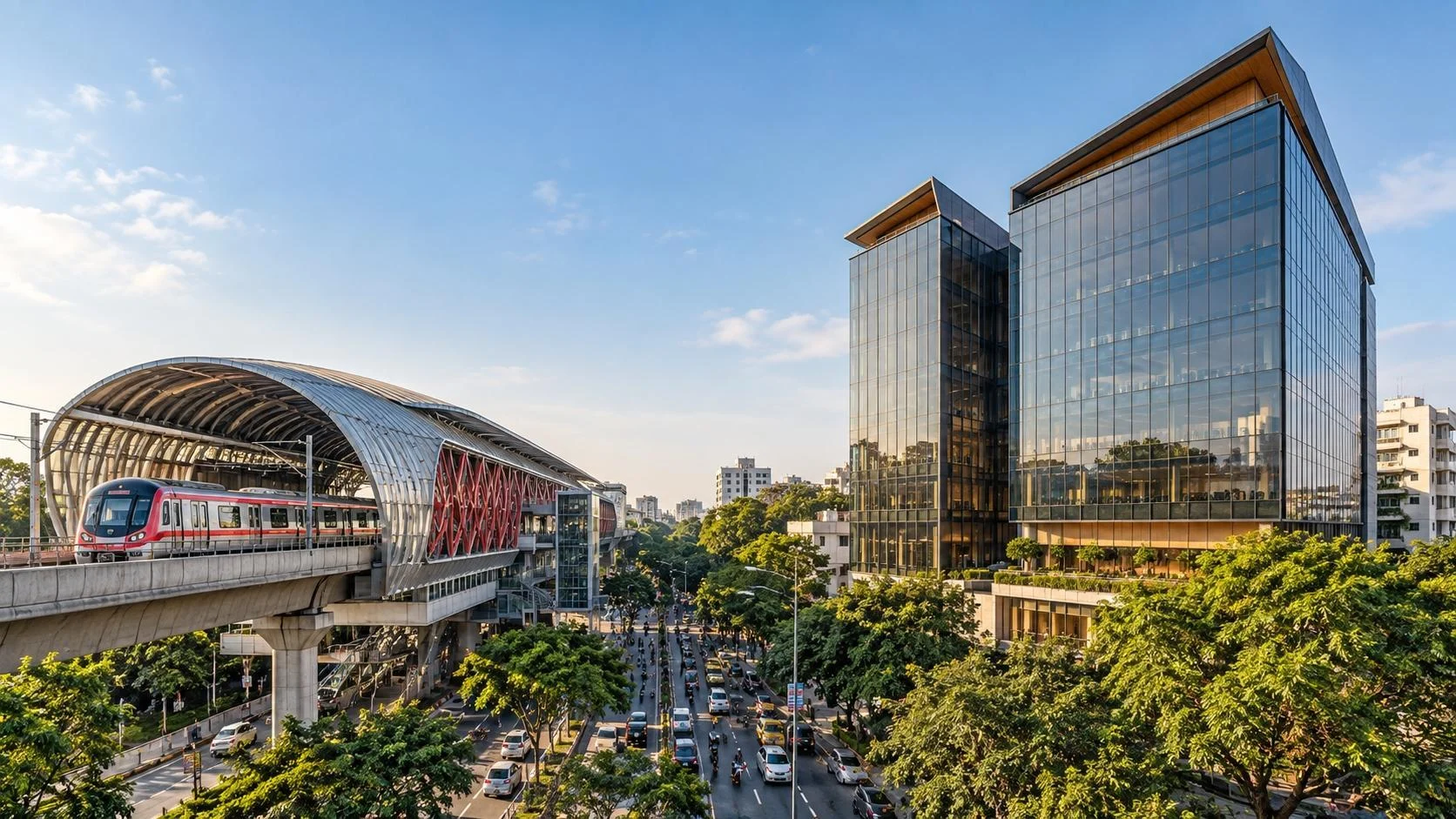
Public transport is another important consideration. Pune Metro identifies JM Road among the landmarks served by Deccan Gymkhana station, with nearby connections toward Karve Road and FC Road.
JM Road can work particularly well for:
- Consulting and professional services
- Chartered accountants and financial firms
- Lawyers and advisory businesses
- Healthcare and specialist practices
- Established SMEs
- Client-facing businesses
- Companies wanting a recognizable Central Pune address
The corridor can also be useful for businesses whose employees travel from different parts of Pune rather than one specific residential catchment.
However, buyers should not assume that every commercial property on JM Road offers the same experience.
Individual buildings can vary considerably in parking, entry and exit access, office layouts, elevators, power backup and overall commercial infrastructure.
The building therefore matters just as much as the road name.
Deccan: Strong Everyday Convenience and City Connectivity
Deccan remains one of Pune's busiest and most familiar areas.
Its advantage for businesses is the surrounding ecosystem. Employees and visitors have access to restaurants, banks, retail, public transport and a range of everyday services within the larger Deccan and FC Road area.
The Deccan Gymkhana Metro Station sits close to several important roads, including Karve Road, FC Road and JM Road, which strengthens public transport accessibility within this part of Central Pune.
Deccan may suit businesses that value:
- Public transport access
- Employee convenience
- Proximity to established residential areas
- Restaurants and everyday services
- Frequent client meetings
- A central city location
For smaller professional firms or businesses with relatively compact office requirements, Deccan can be practical because of the amount of supporting activity around it.
The main consideration is the individual building.
Some properties in established areas may have older layouts, limited parking or infrastructure that was designed for a different generation of business use. Buyers should therefore evaluate the building carefully rather than choosing only because the address says Deccan.
Shivajinagar: Strong Transport Connectivity and Wider City Access
Shivajinagar has a different character.
Its strength comes largely from connectivity and its position within Pune's wider transport network.
The Shivajinagar Metro Station is connected with the railway station and bus terminus area, while Pune Metro describes the station as having multiple entry and exit points intended to support movement across the surrounding neighbourhood.
Shivajinagar is also part of Pune Metro's north-south corridor, while the wider central network connects through District Court interchange to the east-west route.
Shivajinagar can make sense for:
- Businesses with employees travelling from multiple parts of Pune
- Organizations that prioritize public transport
- Administrative or institutional-facing businesses
- Companies receiving visitors from outside Central Pune
- Businesses that value proximity to major transport connections
The area has a mix of commercial, institutional and government activity, so the exact street and building again become important.
A business should assess whether the micro-location provides the environment it wants for employees and clients.
JM Road vs Deccan vs Shivajinagar: What Should Businesses Compare?
Instead of asking which location is universally "best", businesses can compare them across the factors that affect daily operations.
| Factor | JM Road | Deccan | Shivajinagar |
|---|---|---|---|
| Central Pune access | Strong | Strong | Strong |
| Metro accessibility | Strong through nearby central stations | Strong | Strong |
| Client-facing visibility | Particularly relevant along the main corridor | Strong depending on micro-location | Depends more on exact location |
| Restaurants & services | Strong | Strong | Available across the wider area |
| Public transport | Strong | Strong | Particularly important advantage |
| Professional business environment | Strong in suitable commercial buildings | Mix of commercial formats | Varies by micro-location |
| Parking | Building-specific | Building-specific | Building-specific |
| Modern office supply | Must be assessed project by project | Mix of old and newer properties | Mix of property types |
The table highlights an important point: location alone cannot determine the quality of an office purchase.
Parking Can Change the Practical Experience
Parking deserves separate consideration in Central Pune.
A business may have an excellent location but still face daily inconvenience if employees or clients struggle with vehicle access.
When comparing commercial office space in Pune, check:
- Dedicated parking allocation
- Visitor parking
- Two-wheeler arrangements
- Entry and exit movement
- Parking management
- Mechanical or robotic parking, where applicable
Do not evaluate parking simply by asking whether the building "has parking". Understand how it actually works during business hours.
Look at Client Accessibility Differently From Employee Accessibility
These are often treated as the same thing, but they are not.
Employees travel to the office almost every working day. Clients may visit occasionally but expect the office to be easy to find and reach.
For employees, evaluate commuting time, metro access, buses and last-mile connectivity.
For clients, consider:
- Recognizability of the address
- Ease of giving directions
- Parking
- Building entrance
- Drop-off convenience
- Proximity to familiar landmarks
A strong office space in Central Pune should ideally balance both requirements.
Older Location Does Not Have to Mean Older Office
Central Pune has a large stock of established buildings, but buyers should distinguish between the age of the neighbourhood and the quality of the commercial building.
A modern office within an established location can offer a different proposition from occupying an older commercial property simply because both share the same postcode.
When comparing buildings, evaluate:
- Floor planning
- Power backup
- Elevators
- Security
- Fire-safety provisions
- Parking
- Common areas
- Building management
- Technology readiness
- Flexibility for future business requirements
This is especially important for businesses planning to occupy the office for the long term.
Which Location Works Better for Your Business?
There is no single answer for every Pune business.
JM Road can make sense for companies looking for a recognized Central Pune commercial address, strong visibility and access to the Deccan business ecosystem.
Deccan can be practical for organizations prioritizing public transport, employee convenience and access to an established mix of services.
Shivajinagar may be particularly relevant where wider transport connectivity and access from multiple parts of Pune are major considerations.
The right decision therefore depends on the business model.
A company that meets clients every day may evaluate these locations differently from a back-office operation or a business whose employees primarily use public transport.
Where Maverick Fits Into the JM Road Option
For businesses specifically evaluating commercial office space on JM Road, Maverick by Namrata Group provides an opportunity to combine an established Central Pune location with a newer commercial office environment.
Rather than evaluating Maverick only because of the JM Road address, businesses should compare it using the same practical criteria discussed in this article:
- Office configuration
- Road access
- Parking
- Metro connectivity
- Employee convenience
- Client accessibility
- Building infrastructure
- Long-term business suitability
That approach makes the comparison more useful than simply choosing between addresses.
Businesses exploring commercial property on JM Road should ultimately assess how well the individual office and building support their everyday operations.
Final Thoughts
JM Road, Deccan and Shivajinagar all benefit from being part of Pune's established central business environment.
Their differences become clearer when a business moves beyond the broad location name and considers the actual daily experience of operating there.
For anyone looking for commercial office space in Pune, the most useful approach is to compare:
location + connectivity + building quality + parking + office planning + business requirements.
A familiar address is valuable, but the office still needs to work for employees, clients and future growth.
For businesses considering Central Pune, comparing JM Road, Deccan and Shivajinagar through these practical factors can make the final office decision considerably clearer.
FAQs
1. Is JM Road a good location for office space in Pune?
JM Road provides central access, proximity to Deccan and metro connectivity, along with an established commercial and service ecosystem. Buyers should still compare individual projects based on parking, infrastructure, layout and access.
2. What should businesses check before buying office space in Central Pune?
Businesses should check employee and client accessibility, metro and road connectivity, parking, office layout, building infrastructure, total ownership cost and future expansion requirements.
3. Is Deccan different from JM Road for office buyers?
The two areas are closely connected, but individual micro-locations and buildings can offer different levels of visibility, access, parking and commercial infrastructure.
4. What makes Shivajinagar useful for businesses?
Shivajinagar has strong public transport connections, including metro, railway and bus access, which can make it relevant for businesses whose employees and visitors travel from different parts of Pune.
5. Should location or building quality be more important when buying an office?
Both need to be evaluated together. A strong location cannot compensate for poor parking, inefficient layouts or inadequate infrastructure, while a good building may be less useful if employees and clients find it difficult to reach.