
Growing businesses invest carefully in their name, website, team, customer experience and market positioning. But one part of the brand is often treated only as a property decision: the office address.
Before a client reaches the reception desk, they have already noticed where the office is located, how easy it is to find and the type of commercial environment surrounding it. These small signals can influence how established, accessible and professional a business feels.
An address cannot replace strong service or good work. But the right office location can reinforce the image a growing business is already working to build.
Why Does a Recognised Business Address Influence Perception?
Clients often feel more comfortable visiting a business located in a recognised commercial district.
The reason is simple. Familiar business locations are generally easier to identify, explain and reach. They are also associated with an established ecosystem of offices, professional services, banks and supporting infrastructure.
This can matter particularly for client-facing businesses such as:
- Chartered accountants
- Lawyers
- Consultants
- Financial advisory firms
- Specialist practices
- Agencies
- Growing SMEs
For businesses evaluating office space for sale in Pune, location should therefore be considered as part of business positioning, not only as a commuting decision.
A recognised address can support the impression that a company is established, accessible and ready to serve a growing client base.
Your Office Address Becomes Part of Your Brand Identity
An office address is not visible only when a customer visits the workplace.
It also appears across the wider business identity:
- Website
- Google Business Profile
- Business cards
- Email signatures
- Proposals
- Invoices
- Corporate documents
- Maps and directories
- Client communications
Over time, customers may begin to associate the company with its location.
This is why the physical office and the digital brand should ideally support the same positioning.
A business that presents itself as professional and established online may want its physical workplace to create a similar impression when clients visit.
For growing businesses, this alignment becomes increasingly important as the company begins working with larger clients, expanding its team or competing for higher-value opportunities.
How Can an Office Address Support Client Confidence?
Client confidence is created through many interactions, but the office experience can contribute to it.
A professional commercial address can make meetings easier to arrange and help visitors feel more comfortable about where they are going.
Businesses should consider whether the location offers:
- Easy identification
- Convenient access
- Suitable visitor parking
- Public transport connectivity
- A professional building environment
- Reliable security and entry systems
- Well-maintained common areas
These factors do not determine the quality of a business, but they can influence the experience surrounding an important client meeting.
For businesses that regularly meet customers, partners or investors in person, this experience can become part of the brand itself.
Accessibility Still Matters, But Recognition Alone Is Not Enough
A well-known address has limited value if reaching the office is consistently difficult.
Businesses should therefore evaluate recognition and practical accessibility together.
When comparing commercial property in Pune, buyers can consider:
- Access from important parts of the city
- Metro or public transport availability
- Parking for clients and employees
- Ease of navigation
- Nearby business services
- Connection to established commercial areas
When these factors work together, the office can support both brand perception and everyday convenience.
The goal is not simply to choose a prestigious location. It is to choose an address that works well for the people who actually use it.
When Does a Business Outgrow Its Current Office Address?
Businesses usually think about moving because they need more space. But sometimes the address itself no longer matches where the company is heading.
A business may have outgrown its current location when:
- Client meetings have become more frequent
- The company is targeting larger or more established clients
- The existing building no longer reflects the brand's positioning
- Parking or accessibility creates repeated difficulties
- The team has grown beyond the current setup
- The company wants a more permanent business presence
- The existing office cannot support future expansion
- The business needs a stronger professional environment
At this stage, an office move becomes more than a real-estate decision.
It becomes part of the next phase of the business.
Buying an Office With the Next Stage of the Business in Mind
Businesses often evaluate an office based on their current team size and immediate requirements.
A better long-term decision also considers where the organisation may be three to five years from now.
Before buying, businesses can ask:
- Will this address still suit the company as the client base grows?
- Can the office support a larger team?
- Is there enough flexibility in the office configuration?
- Can the location support regular client meetings?
- Does the building match the level of professional experience the company wants to provide?
- Will employees from different parts of the city be able to access it comfortably?
- Is the location likely to remain relevant to the business in the long term?
This is particularly important for companies planning to buy an office in Pune CBD, where the decision often involves both business usability and long-term ownership considerations.
What Should Growing Businesses Look for in an Office Address?
The right office address is not defined by one factor.
Businesses should evaluate the complete environment.
1. Location Recognition
Is the area familiar to customers, employees and business partners?
2. Connectivity
Can people reach the office conveniently by road and public transport?
3. Building Environment
Does the building provide a professional setting suitable for meetings and daily business operations?
4. Parking
Is parking available for business owners, employees and visitors?
5. Office Flexibility
Can the space support the company's current requirements as well as future growth?
6. Supporting Business Ecosystem
Are banks, professional services, hospitality and other useful facilities available nearby?
7. Long-Term Relevance
Will the location continue to support the business if the company grows, hires more people or serves a wider customer base?
Evaluating these factors together can help businesses move beyond simply choosing an office and instead select an address that supports their wider business goals.
Maverick and the Value of a JM Road Business Address
Maverick by Namrata Group is located on JM Road in Deccan, one of Central Pune's recognised commercial locations.
For businesses looking for premium commercial spaces in Pune, the JM Road address brings together visibility, connectivity and access to an established business environment.
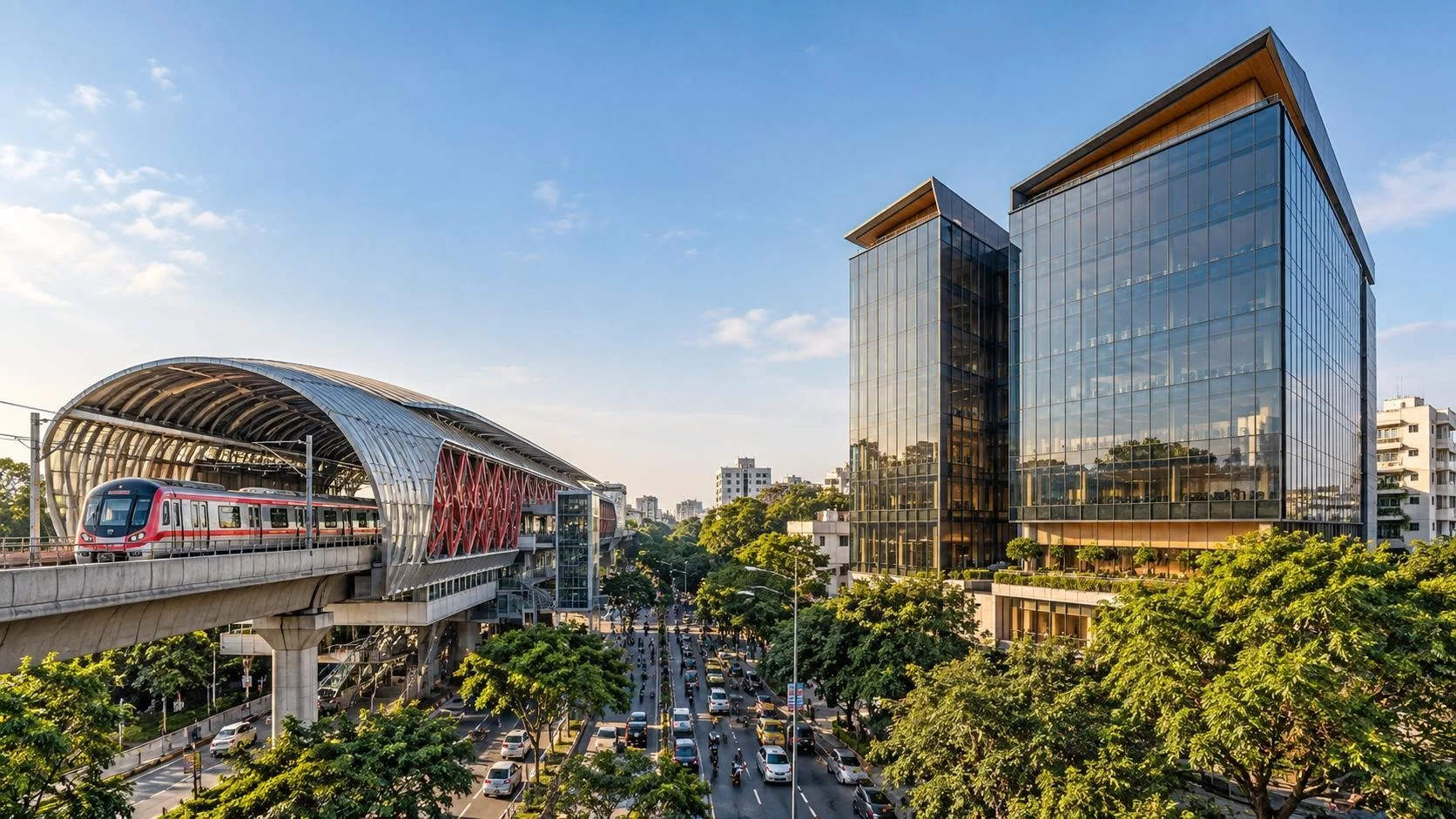
Maverick is planned as a corporate-focused commercial office project with flexible office configurations, reserved parking, metro connectivity and infrastructure designed around professional occupiers.
For a growing business, these elements work together in different ways.
The address supports recognition.
The connectivity supports access.
The commercial environment supports a professional workplace experience.
Rather than treating location and building quality as separate factors, businesses can evaluate how both contribute to the image and usability of the office over the long term.
Final Thoughts
Brand perception is created through many small signals.
The company name, communication, customer service and quality of work will always matter most. But the office address is one of the few brand signals experienced by clients, employees, partners and visitors at the same time.
For growing businesses, choosing an office should therefore involve more than price and square footage.
The question is also:
Does this address represent where the business is going next?
Businesses evaluating office space for sale in Pune should choose an address that supports accessibility, professional credibility and their long-term growth plans.
Explore Maverick on JM Road, Pune and discover commercial office spaces designed for growing businesses.
FAQs
Can an office address improve business credibility?
A recognised and accessible commercial address can support positive first impressions and make a business feel more established. However, long-term credibility still depends on the quality and consistency of the business itself.
What makes a strong business address in Pune?
A strong business address typically combines location recognition, road and public transport connectivity, parking, nearby services and a professional commercial environment.
When should a growing business consider changing its office location?
Businesses may consider changing location when the existing office no longer supports team growth, regular client meetings, accessibility requirements or the professional positioning the company wants to build.
Should businesses consider future growth before buying office space?
Yes. Businesses should evaluate whether the office can accommodate future team requirements, client activity, operational needs and the company's longer-term positioning.
Where is Maverick located?
Maverick by Namrata Group is located on JM Road in Deccan, Central Pune, with access to established commercial infrastructure and public transport connectivity.