
Buying commercial office space in Pune is not simply a search for the lowest rate or the most impressive lobby. It is a decision about how a property will work for a business, protect capital and remain useful as needs change.
The strongest purchase usually begins with a clear brief. Why are you buying? Who will use the office? How long should it work for you? Once those answers are defined, location, size, costs and documentation become easier to compare.
1. Start with the purpose: own use or investment
An owner-occupier should begin with operations. Consider employee travel, client access, the number of workstations, meeting-room needs, brand visibility and the possibility of future hiring. A slightly larger or better-connected office may be worthwhile if it reduces daily friction for several years.
An investor should begin with occupier demand. Ask which businesses are likely to lease the unit, what office sizes they prefer, how much competing supply exists and whether the building can remain relevant to more than one tenant category. A property that suits only a narrow business type may take longer to lease or resell.
If the office may serve both purposes over time, evaluate it twice: first as a workplace and then as an asset another business would choose.
2. Choose a commercial location, not just a pin code
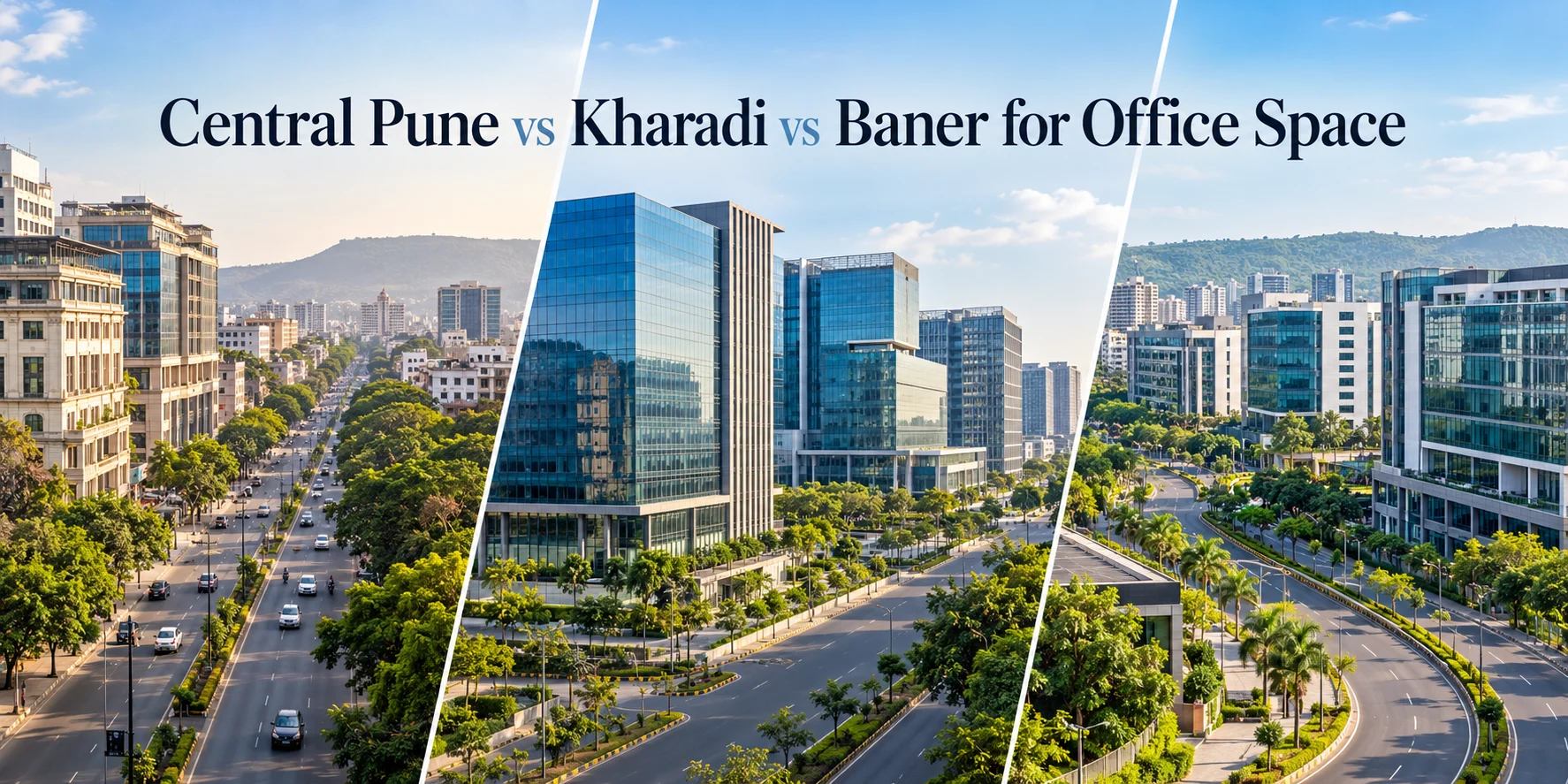
The right commercial location in Pune depends on the people who need to reach it. A technology campus may suit a large occupier, while a central business address may work better for consultants, doctors, financial professionals, agencies and client-facing firms.
When comparing locations, check:
- access by metro, bus and road
- travel convenience from major residential areas
- proximity to clients, banks, professional services and institutions
- visibility and ease of finding the building
- parking conditions in the surrounding streets
- existing and planned office supply
Visit the micro-market on a working weekday. A route that looks simple on a map can feel very different during office hours.
3. Decide the right office size from a working layout
Do not choose size only by multiplying the current headcount by a standard area. Prepare a basic space plan that includes workstations, cabins, reception, meeting rooms, storage, server or utility space and internal circulation.
Then test two scenarios: the business as it operates today and a realistic expansion case. Buying too small can force an early move. Buying far beyond foreseeable needs can lock capital into unused space. The useful middle ground is a configuration that works now and can be rearranged later.
Carpet area versus usable area: keep the comparison consistent
Under RERA, carpet area is the net usable floor area within the unit, subject to the statutory definition. Usable office area is a practical planning term and may be discussed differently by different sellers or consultants.
Use the declared RERA carpet area as the consistent starting point. Then inspect the dimensions, columns, wall positions and entrance placement to understand how much of that area can support the layout you need. For a detailed explanation, read the guide to carpet area vs usable area in commercial property.
4. Check configuration and expansion options
Two offices with the same carpet area can perform very differently. A regular floor plate, sensible column positions, good daylight and a clear entrance can make planning easier. Check whether adjacent units can be combined, whether meeting rooms can be added without blocking circulation and whether services support a future reconfiguration.
Also understand the delivery condition. A bare shell, warm shell and fitted office involve different timelines and fit-out budgets.
5. Inspect the infrastructure people use every day
Commercial infrastructure should be evaluated as an operating system, not a feature list.
- Parking: Verify the allocation, access process and capacity for cars and two-wheelers. In Central Pune, reserved parking can reduce unsafe roadside parking and time spent circling for a space.
- Lifts: Check the number, capacity and expected waiting time at peak hours.
- Power backup: Ask what systems and areas are covered, not only whether backup exists.
- Security: Review access control, CCTV coverage, visitor handling and fire-safety provisions.
- Connectivity: Check mobile reception, internet-provider options and the route from public transport to the entrance.
6. Budget for costs beyond the purchase price
The quoted consideration is only one part of the acquisition cost. Build a complete budget for applicable taxes, stamp duty, registration, legal review, loan charges, fit-out, furniture, technology, moving, maintenance deposits, recurring common-area maintenance, property tax and insurance.
For an under-construction office, also plan for the period between payment and possession. For a leased investment, model a vacancy period and leasing costs instead of assuming immediate occupancy.
7. Complete basic legal and document checks
Before committing, verify the project on MahaRERA and review the registered details, sanctioned plans, title-related documents, approvals, agreement terms, payment schedule, specifications and possession commitments with an independent property lawyer.
For a resale or ready office, the review may also include the chain of title, encumbrances, society or association records, dues, sanctioned use and occupancy-related documents. Use the detailed commercial property documents checklist for Pune buyers as a working reference. This article is educational and is not a substitute for legal or tax advice.
8. Evaluate Namrata Group and project credibility
Check the track record behind the project, the clarity of communication, construction progress, specifications, contractual commitments and the proposed approach to operations after possession. For an under-construction purchase, MahaRERA disclosures should be matched with the agreement and the information given during the sales process.
Quality also extends beyond handover. The building’s maintenance plan, parking operations, security, lift upkeep and common-area standards will shape the experience for owners and tenants.
9. Think about leasing and resale before purchase
Even an own-use buyer should consider future liquidity. Ask whether the office size appeals to a broad occupier base, whether the layout can serve another business, whether access works for clients and employees and how much competing stock exists nearby.
For an investment, compare achievable rent with the full acquisition and operating cost. Use realistic vacancy, maintenance and brokerage assumptions. Do not rely on advertised yield or appreciation statements without independent evidence.
Commercial office buying checklist
- Define own use, investment or a future combination of both.
- Shortlist the micro-market based on occupier and business access.
- Test the office size with a working layout and expansion case.
- Compare RERA carpet area and inspect practical usability.
- Verify parking, lifts, backup power, security and connectivity.
- Calculate the complete acquisition and holding cost.
- Complete independent legal and MahaRERA checks.
- Review project credibility, maintenance planning and delivery terms.
- Test leasing demand, vacancy risk and resale appeal.
- Visit the building and surrounding location on a working day.
A brief JM Road and Maverick context
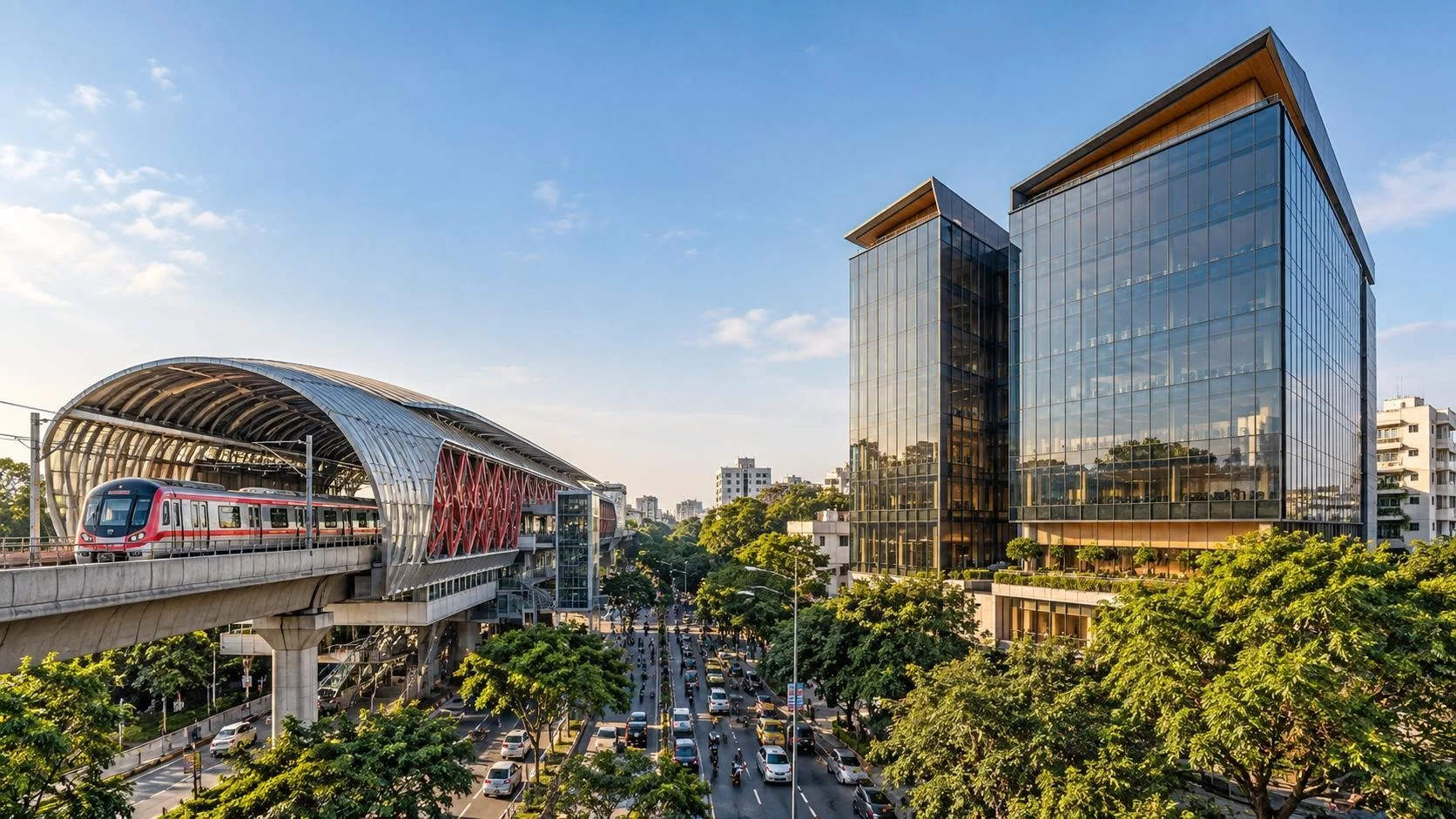
JM Road is an established Central Pune corridor used by professional, healthcare, financial and client-facing businesses. Its metro and road access, address familiarity and surrounding services make it relevant to buyers who prioritise centrality.
Maverick - The Topnotch Commercial Spaces, a project by Namrata Group, is a corporate-only commercial building on JM Road. It offers 76 offices with carpet areas from 410 to 1,327 sq. ft., direct metro connectivity, two-side road visibility, reserved robotic car parking, ample two-wheeler parking, three high-speed elevators, access control, CCTV and 100% DG backup. Project registration details can be checked under MahaRERA number P52100055550.
The right next step is not to decide from a brochure. It is to compare the unit, documents, total cost and daily access in person.
Shortlisting office space for sale in Pune? Book a site visit to Maverick on JM Road and carry this checklist with you. Explore the project at https://namratamaverick.com/ or call +91 90247 76600.
FAQs
What is the first step when buying commercial office space in Pune?
Define whether the office is for own use, investment or both. That decision shapes the location, size, budget and leasing criteria.
Which documents should a commercial office buyer verify?
Common checks include MahaRERA details, title-related records, approvals, sanctioned plans, agreement terms and payment schedules. Buyers can refer to our commercial property documents checklist for a more detailed breakdown.
How much office space should a growing business buy?
Base the decision on a working space plan, current team needs and a realistic expansion scenario. Avoid relying only on headcount or advertised area.
What is the difference between carpet area and usable office area?
Carpet area is a defined RERA measure. Usable office area is a practical planning concept. Start with the declared carpet area and then inspect whether the layout supports productive use.
Which documents should a commercial office buyer verify?
The exact list depends on the transaction. Common checks include MahaRERA details, title-related records, approvals, sanctioned plans, agreement terms, payment schedule and possession commitments. Obtain independent legal advice.
Why do parking and lifts matter to office buyers?
They affect everyday arrival, visitor convenience and employee experience. Poor parking or long lift waits can reduce the usefulness and tenant appeal of an otherwise good office.
Is JM Road suitable for an own-use office?
It can suit client-facing and professional businesses that value a recognisable Central Pune address, public transport, road access and an established business ecosystem.