
The Pune office market in 2026 is active, but the headline numbers require context. Citywide leasing is dominated by large transactions in major Grade A corridors. A business buying a 500 or 1,000 sq. ft. office in Central Pune is making a different decision from a global occupier leasing a campus.
The data is still useful. It shows the strength of overall occupier activity, the sectors taking space and the amount of new supply entering the market. Buyers should then translate those signals to the exact micro-market, building and unit
Pune office market overview for 2026
Cushman & Wakefield reported 3.22 million sq. ft. of gross leasing in Pune during Q2 2026, taking first-half leasing to 5.31 million sq. ft. The same report recorded about 3 million sq. ft. of new Grade A supply in Q2 and described vacancy as broadly stable.
JLL’s Q1 2026 office report showed Pune accounting for 14.5 per cent of gross leasing across the seven cities it tracked. It also reported that flexible workspace operators represented 54.8 per cent of Pune’s quarterly leasing volume.
These figures come from different firms and periods, so they should not be combined as if they use one methodology. Together, they point to strong office activity and a market in which flex space and global occupiers remain important.
2026 data snapshot
| Indicator | Reported figure | Source and period |
| Pune gross leasing | 3.22 million sq. ft. | Cushman & Wakefield, Q2 2026 |
| Pune H1 gross leasing | 5.31 million sq. ft. | Cushman & Wakefield, H1 2026 |
| Pune share of tracked-city leasing | 14.5% | JLL, Q1 2026 |
| Flex share of Pune leasing | 54.8% | JLL, Q1 2026 |
| New Pune Grade A supply | About 3 million sq. ft. | Cushman & Wakefield, Q2 2026 |
What is driving office demand
Pune combines skilled talent, technology and engineering capabilities, established industrial activity and a cost profile that attracts domestic and global companies. Business growth, return-to-office strategies, portfolio consolidation and flexible-workspace expansion all influence leasing.
Infrastructure also matters. Metro development and road connectivity widen access to some locations, while established business ecosystems continue to support districts that are not large technology campuses.
Sectors and occupiers shaping demand
Cushman & Wakefield identified flexible workspace operators as the leading demand segment in Q2 2026, followed by IT-BPM and BFSI firms. It also reported that global capability centres contributed more than half of quarterly leasing.
This matters because each sector has different space requirements. GCCs and large technology firms often need sizable Grade A floor plates. Flexible operators aggregate demand across many users. Professional firms, clinics, consultancies and owner-managed businesses may prefer smaller offices closer to clients and established city networks.
Pune’s key commercial micro-markets
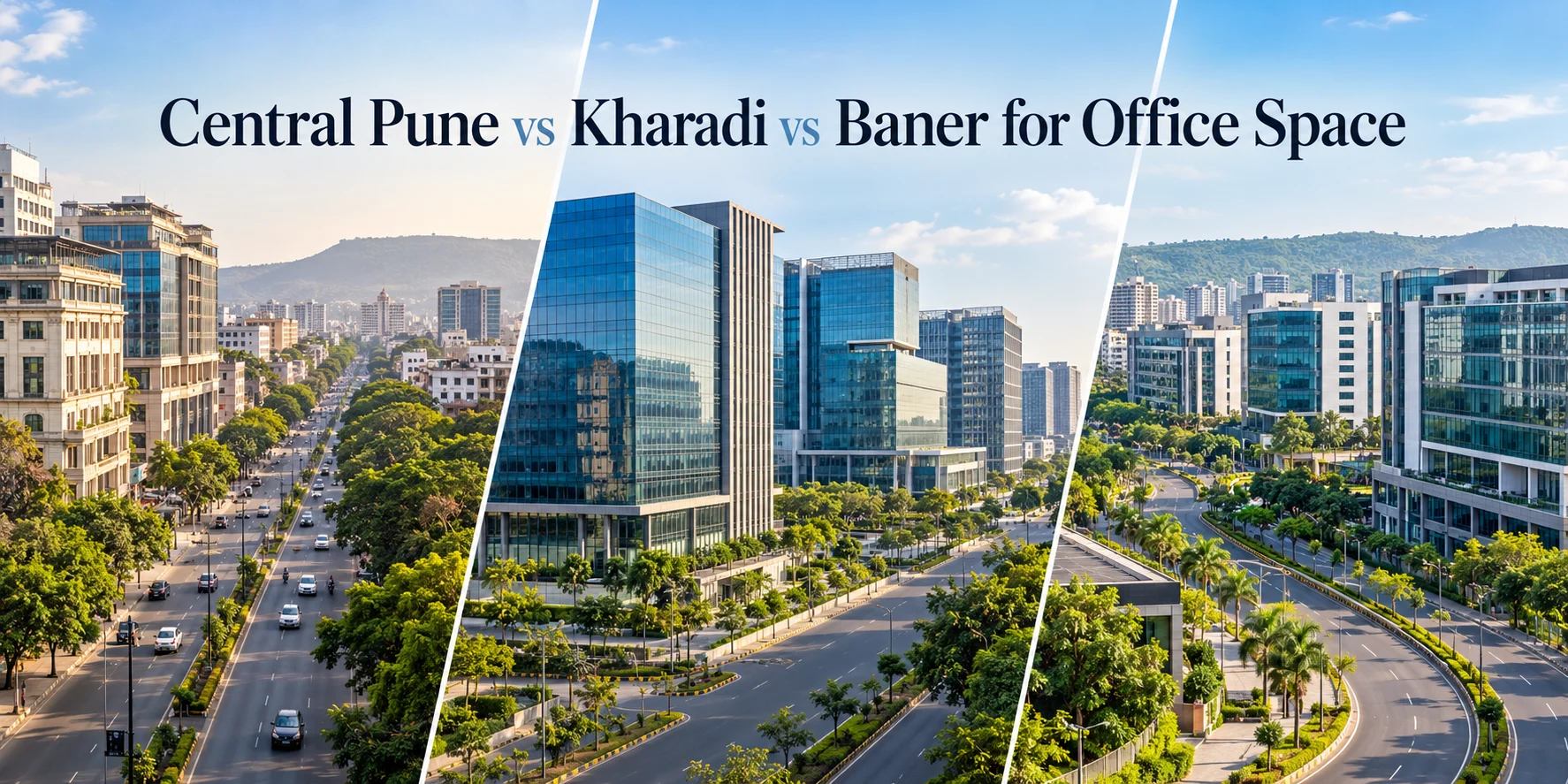
Pune’s office landscape includes Kharadi and the eastern business districts, Hinjawadi and western peripheral corridors, Baner and Balewadi, Yerawada and Viman Nagar, as well as Central Pune locations such as Shivajinagar, Deccan and JM Road.
The large peripheral and suburban markets serve campus-style and major corporate requirements. Central Pune serves a different mix, including professional services, healthcare, education, finance, consulting, agencies and client-facing firms. Comparing them only by citywide rent or absorption can hide the operational differences.
The current role of Central Pune
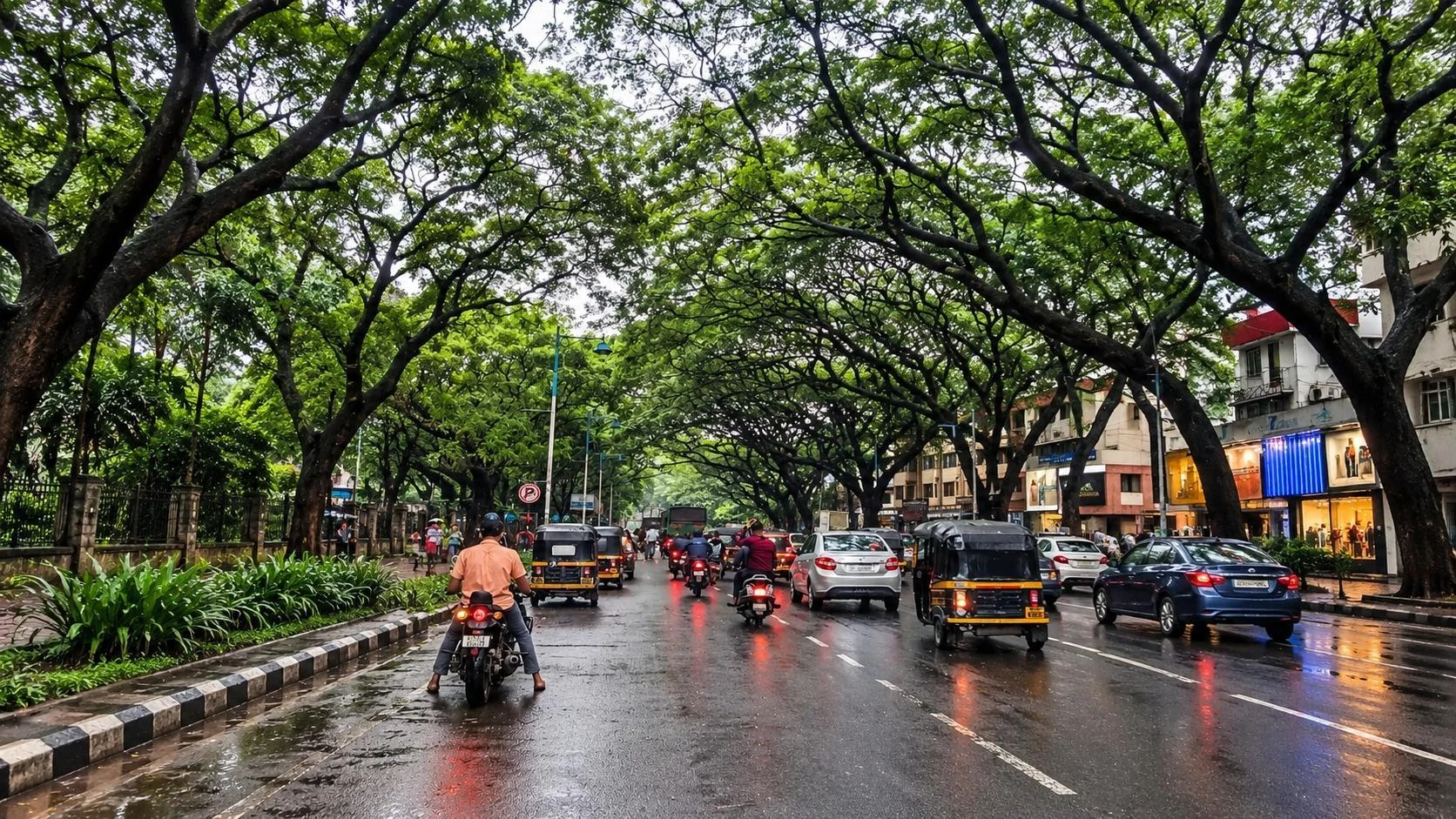
Central Pune remains relevant where address familiarity, client access, public transport and proximity to established services matter more than a large campus. It can also suit owner-occupiers who want a long-term base and investors targeting compact offices.
Its limitations are real: traffic, constrained land, older buildings and inconsistent parking. The opportunity lies in modern office projects that solve these practical weaknesses while retaining central access.
Office supply and development trends
Cushman & Wakefield reported around 3 million sq. ft. of new Grade A supply in Pune during Q2 2026, concentrated primarily in SBD East. New supply gives occupiers choice and can raise the quality benchmark, but it also increases competition between buildings.
Central districts cannot add large greenfield campuses easily. New stock is more likely to come through selective redevelopment. This creates a smaller, unit-led market that should be assessed separately from citywide Grade A supply.
What businesses expect from office buildings in 2026
Businesses increasingly examine the whole working day. They expect reliable lifts and power, safe access, practical parking, visitor management, good digital connectivity, efficient layouts and common areas that remain well maintained.
Public transport is increasingly relevant, but so are road arrival and parking. A building can be close to a metro and still create friction if the walking route, drop-off, entry or lift movement is poorly planned. Read more about what modern businesses expect from commercial buildings.
Demand for small and mid-sized commercial offices
Headline leasing reports mainly capture larger organised transactions. They do not fully describe the market for compact offices bought or leased by doctors, accountants, lawyers, consultants, agencies, financial professionals and small or mid-sized businesses.
For this segment, ticket size and layout flexibility matter. An office that can support a professional practice today and another service business later may have a broader occupier pool than a highly specialised unit.
Metro and road connectivity
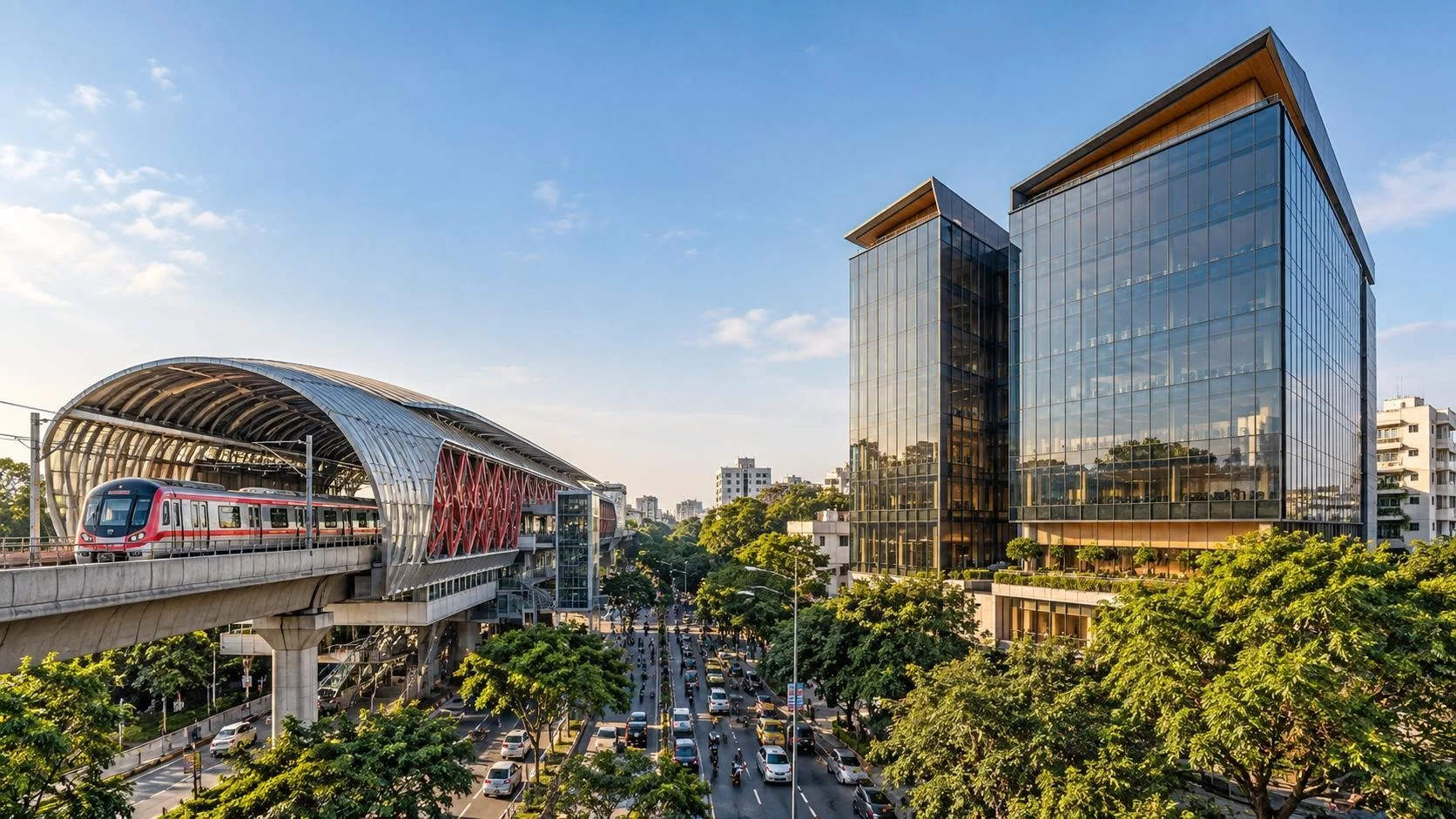
Pune Metro’s operational network adds a new layer to office accessibility. For Central Pune, it can reduce dependence on private vehicles for some journeys and make a location easier to reach from different parts of the city.
Road access remains equally important. Buyers should test the complete arrival experience, including crossings, drop-off, parking and the path from station to building.
Established districts versus newer corridors
Newer corridors offer large Grade A projects, planned campuses and substantial supply. Their performance may be closely tied to large occupiers and future infrastructure.
Established districts offer address recognition, existing services and diversified local demand, but the building stock varies. The better comparison is not old versus new. It is whether a specific project combines present demand, usable infrastructure and a price supported by realistic leasing and exit assumptions.
What office buyers should watch in 2026
- leasing activity in the target micro-market, not only across Pune
- new supply completing near the expected possession date
- the occupier categories active in the relevant size band
- net cost after fit-out, maintenance, vacancy and financing
- parking, lift and backup-power capacity
- MahaRERA details, approvals and agreement terms
- building-management plans after possession
- exit liquidity and competing resale stock
Where JM Road fits in Pune’s commercial market
JM Road is not a substitute for Kharadi or Hinjawadi, and it does not need to be. It serves businesses that value a Central Pune address, proximity to professional and civic networks, road connectivity and Pune Metro access.
Pune Metro’s official route map lists Chhatrapati Sambhaji Udyan station on the operational Vanaz to Ramwadi corridor. This station access adds to JM Road’s long-standing road network and wider business ecosystem.
For business owners, that can mean a recognisable address and multiple commuting options. For investors, it can support interest from professional and client-facing occupiers. Neither outcome is automatic. Unit efficiency, building quality, maintenance, price and documentation still determine the asset’s strength.
A brief Maverick connection
Maverick - The Topnotch Commercial Spaces is a corporate-only project by Namrata Group on JM Road. It offers 76 offices with carpet areas from 410 to 1,327 sq. ft., direct metro connectivity, two-side road visibility, reserved robotic car parking, ample two-wheeler parking, three high-speed elevators, access control, CCTV and 100% DG backup.
The project is relevant to the 2026 market discussion because it brings contemporary office infrastructure into an established Central Pune corridor. Buyers should still compare its unit, complete cost, MahaRERA disclosures and possession commitments with their own-use or investment objective. MahaRERA number: P52100055550.
Evaluating office space for sale in Pune in 2026? Start with the market, then compare the micro-market, building and unit. Explore Maverick on JM Road at https://namratamaverick.com/ or call +91 90247 76600.
FAQs
Is Pune’s office market active in 2026?
Yes. Cushman & Wakefield reported 5.31 million sq. ft. of gross leasing in Pune during H1 2026. Performance still varies by micro-market and building.
Which sectors are driving Pune office demand?
Current reports point to flexible workspace operators, IT-BPM, BFSI and global capability centres as important demand sources.
Does citywide leasing data apply to small offices?
Not directly. Large market reports mainly track organised office transactions. Small and mid-sized offices should be evaluated through local occupier demand, unit size, access and comparable leases.
What role does Central Pune play in the office market?
Central Pune serves professional, healthcare, financial, education and client-facing businesses that value a familiar address and established networks.
Where does JM Road fit?
JM Road offers Central Pune road access, an established business ecosystem and Pune Metro connectivity. It serves a different occupier profile from large campus corridors.
What should an office buyer watch in 2026?
Watch target micro-market demand, upcoming supply, unit efficiency, total cost, building operations, documentation, possession commitments and exit liquidity.